RV Generator Altitude Performance: Tuning and Adjustments for High Elevations
When you take your RV into the mountains, the thinning air at high elevations dramatically alters how your generator runs. Without proper tuning, you risk stumbling performance, excessive smoke, and even permanent damage to the engine. This guide provides a structured approach to diagnosing, adjusting, and maintaining your RV generator for altitudes above 5,000 feet.
Why Does My Generator Struggle at High Altitudes?
At elevations above 5,000 feet, atmospheric pressure drops by roughly 12% compared to sea level. This means less oxygen enters the combustion chamber during each intake stroke. Most RV generators are tuned at the factory for sea-level air density (about 14.7 psi). When you reduce oxygen, the air-fuel mixture becomes too rich—too much fuel relative to available oxygen. The result is incomplete combustion, carbon buildup, reduced power output, and increased fuel consumption.
Common symptoms include rough idling, black smoke from the exhaust, surging under load, and difficulty starting. In severe cases, the generator may stall when appliances like an air conditioner or microwave kick on. The issue is compounded by the fact that many generators use carburetors or fixed-jet fuel systems that lack automatic altitude compensation.
For generators with electronic fuel injection (EFI), the ECU may adjust fuel trim to a limited extent, but these systems are rarely calibrated for altitudes above 8,000 feet.
What Specific Adjustments Are Needed for High-Elevation Generator Operation?
The primary adjustment is to lean the air-fuel mixture. This is accomplished by reducing fuel flow or increasing air intake. The exact method depends on your generator’s fuel system type:
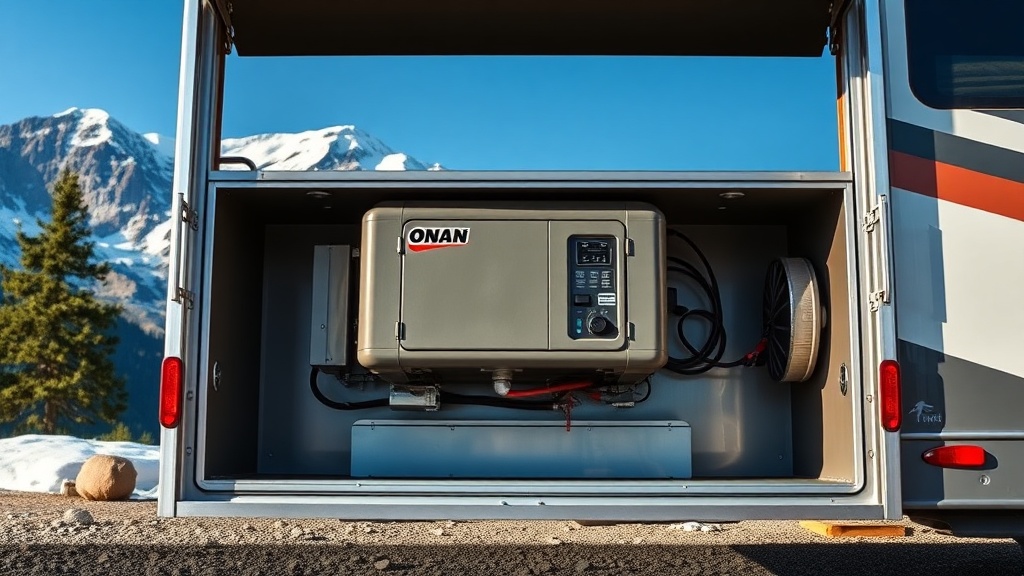
- Carbureted generators: Replace the main jet with a smaller one (typically one size per 2,000 feet of elevation). For Onan 4.0 kW Microlite and similar models, a #37 jet often works at 5,000–7,000 feet, dropping to #35 at 8,000–10,000 feet. You must also adjust the idle mixture screw (usually 1/4 to 1/2 turn outward from stock).
- EFI generators: Use a diagnostic tool (like the Onan Companion app or Cummins Insite) to modify the fuel maps. Reduce the fuel injector pulse width by 5–8% at mid-range loads. Alternatively, some operators install an adjustable fuel pressure regulator to drop rail pressure by 3–5 psi.
- Propane/LPG generators: The propane vaporizer and demand regulator require recalibration. Turn the main adjustment screw clockwise to reduce gas flow by 1/4 turn increments until the exhaust clears and RPM stabilizes. Always test under a 50% load first.
Important: Never adjust the mixture while the generator is running without a load. Always load the generator to at least 30% of its rated capacity before making final adjustments. A lean idle without load can cause a dangerous lean condition under load.
How Do I Re-Jet a Carbureted Generator for Altitude?
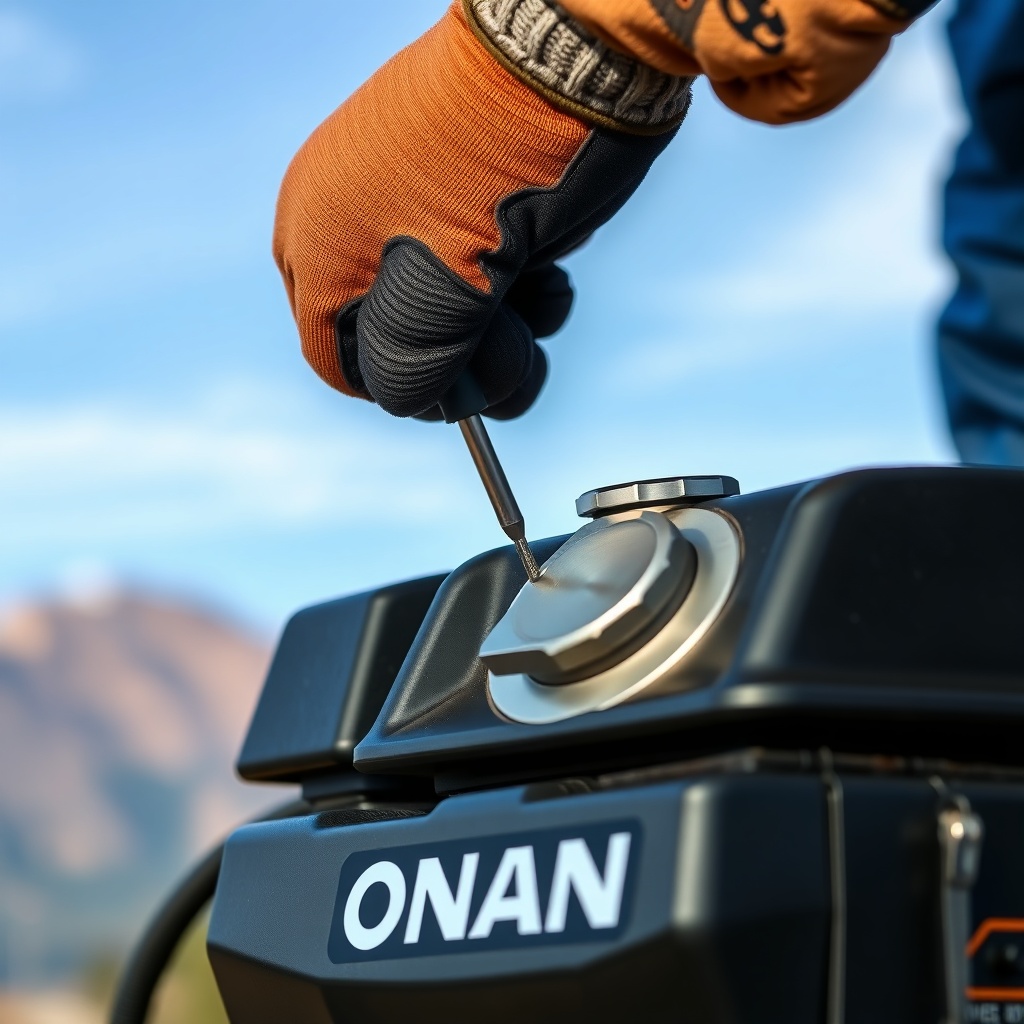
Re-jetting is the most reliable method for carbureted RV generators. Here is a step-by-step procedure adapted for most Onan, Honda, and Generac models:
- Safety first: Disconnect the battery, shut off fuel supply, and allow the generator to cool completely.
- Remove the carburetor: On Onan 4000-series generators, remove the air cleaner assembly and two mounting bolts. Carefully detach the fuel line and governor linkage.
- Extract the main jet: Using a flathead screwdriver, remove the main jet from the bottom of the carburetor float bowl. Note the stamped jet number (e.g., #39).
- Select the correct jet: Use a jet sizing chart (available from RV parts suppliers) that correlates elevation with jet size. As a rule of thumb, drop one jet size per 2,000 feet above 5,000 feet. For example, a #39 jet at sea level becomes #37 at 6,000 feet, #35 at 8,000 feet.
- Reassemble and test: Reinstall the carburetor, reconnect fuel, and start the generator. Let it warm up for 5 minutes, then apply a 50% load (about 2,000 watts for a 4 kW unit). Check the exhaust—if it still shows black smoke, the jet is too large. If the generator hunts or surges, the jet may be too small.
If you plan to travel frequently between high and low elevations, consider installing a main jet adjustable screw assembly rather than swapping jets each trip. This adds about 20–30 minutes to the procedure but saves time in the long run.
What Are the Risks of Running an Unadjusted Generator at High Altitudes?
Operating an unadjusted generator at high elevation for extended periods carries several serious risks. The table below outlines the severity and potential damage:
| Symptom | Cause | Potential Consequence | Severity Level |
|---|---|---|---|
| Black smoke, rough idle | Rich mixture from lack of oxygen | Spark plug fouling, carbon buildup on valves | Moderate |
| Engine knocking or pinging | Detonation from incomplete combustion | Piston damage, head gasket failure | Critical |
| Generator stalls under load | Fuel mixture too rich, stall from power loss | Component damage, starter failure from repeated restart | High |
| Excessive fuel consumption | Unburned fuel wasted in exhaust | Increased operating cost, potential fuel system corrosion | Moderate |
| Catalytic converter clogging | Unburned fuel damaging catalyst | Significant repair cost (£200–£400) | High |
In the worst cases, repeated detonation can crack pistons or bend connecting rods, requiring a complete engine rebuild that can cost upwards of £1,500 for a 4 kW unit. Always check your exhaust color and listen for knocking when climbing above 5,000 feet.
How Does Propane Conversion Affect Altitude Performance?
Propane has a higher octane rating (104–112) than gasoline, which makes it more resistant to detonation. However, propane systems are more sensitive to altitude because the vaporizer regulator relies on atmospheric pressure to meter gas flow. At elevation, the regulator delivers a richer mixture because the reference pressure drops. This can actually worsen the rich condition compared to gasoline.
If you have a propane conversion kit installed, you will need to install an adjustable demand regulator specifically designed for high-altitude use. Brands like Garretson and Impco offer models with altitude compensation. Without this, you must manually adjust the vaporizer screw to lean the mixture. A proper adjustment involves setting the idle mixture first (using a vacuum gauge), then adjusting the main power circuit under a 70% load.
Another option is to install a propane vaporizer that uses a spring-loaded diaphragm sensitive to ambient pressure. These units automatically reduce gas flow as altitude increases. Expect to pay £120–£200 for a quality unit, but the convenience is worth it for frequent mountain travel.
Can Electronic Fuel Injection (EFI) Generators Handle Altitude Better?
Yes, EFI generators generally manage altitude better than carbureted models because the ECU can adjust the mixture based on oxygen sensor feedback. However, most factory EFI maps are optimized for elevations up to 8,000 feet. Above that, you may still experience performance degradation. Up to 10% power loss is typical at 10,000 feet even with a well-tuned EFI system.
If your RV has an EFI generator (such as the Onan QD 7.5 or Honda EU7000i), consider these upgrades:
- Install a wide-band oxygen sensor: This allows real-time air-fuel ratio monitoring. Target an AFR of 12.5:1 under high load at altitude.
- Use a reprogrammable ECU: Some aftermarket controllers (like the Holley EFI system) allow you to adjust fuel maps manually. This is advanced but provides the best control.
- Add a boost pressure sensor: If you have a turbocharged generator (rare but available), altitude compensation is critical to prevent over-boosting.
For most RVers, the simpler solution is to pair an EFI generator with a clean power inverter system. Inverters can actually help by providing a stable load that prevents the generator from hunting at high altitude.
What Owners Say
Experienced RV owners who travel the Rocky Mountains, the Sierra Nevada, and the Colorado Plateau have developed practical solutions. “I run an Onan 4.0 kW Microlite in my Class C, and I re-jetted it to a #35 jet for trips to 9,000 feet,” explains Mark T., a full-time RVer from Denver. “It runs smooth, no smoke, and I only lose about 400 watts of output. I carry a spare #38 jet for when I come back down.”
Another common tip comes from Sarah L., who travels with a propane-powered generator in her fifth-wheel: “I installed a Garretson KN demand regulator and had to set the idle mixture slightly richer than at sea level. But once done, the generator starts every time at 8,000 feet. I also added a remote start system—the remote start installation was simple, and now I don’t have to go out in the cold to adjust it.”
Diesel generator owners often report fewer altitude issues because diesel engines have no throttle plate and rely on excess air. However, even a diesel generator using ethanol-free fuel benefits from altitude adjustments. Mike P. of Utah notes: “My Cummins 7.5 diesel uses a fuel boost pump that compensates partially. But I still adjust the governor to maintain 60 Hz at elevation. I also check my frequency stability regularly—it’s the best indicator of proper tuning.”
Frequently Asked Questions
1. At what altitude do I need to adjust my RV generator?
Generally, adjustments are recommended above 5,000 feet (1,524 meters). Some generators may tolerate up to 6,000 feet without issue, but performance degradation becomes noticeable beyond that. Check your owner’s manual for manufacturer-specific recommendations.
2. Will my generator produce full rated power at high altitude?
No. Expect a 3–5% power loss per 1,000 feet above 5,000 feet. A 4 kW generator may only deliver 3.2 kW at 8,000 feet. This is due to reduced air density, not just fuel mixture issues.
3. Can I use a transfer switch with an altitude-adjusted generator?
Yes, but ensure the transfer switch installation is rated for the generator’s output. A poorly installed switch can add resistance that further reduces voltage at altitude.
4. How often should I check my generator’s altitude adjustment?
Check every time you change elevation by more than 3,000 feet. For example, moving from 4,000 to 7,000 feet requires an inspection. If you travel seasonally, adjust once per trip.
5. Will ethanol-free fuel help at high altitude?
Yes. Ethanol attracts moisture and can cause phase separation at altitude where temperature swings are large. Using ethanol-free fuel reduces gumming and protects jets and fuel lines.
6. What tools do I need for high-altitude generator tuning?
Minimum: a flathead screwdriver, a jet removal tool (if carbureted), a multimeter for frequency and voltage, a tachometer for RPM, and a vacuum gauge for propane systems. For EFI models, a diagnostic scan tool is helpful.