
Why Is an RV Generator Oil Change So Important?
Your RV generator is the heart of your mobile power system. It runs while you sleep, charges your batteries, and even powers air conditioning on hot days. But like any internal combustion engine, its lifeblood is clean oil. Neglecting an oil change is the fastest way to kill a generator; it causes overheating, sludge buildup, and eventual seizure of the moving parts.
This step-by-step maintenance guide focuses on the RV Generator and answers the most common questions owners have. By the end, you’ll be able to perform an oil change with confidence, saving yourself between £50 and £120 per service.
How Often Should I Change the Oil in My RV Generator?
Most generator manufacturers recommend changing the oil every 100 to 150 hours of runtime, or once per season, whichever comes first. Diesel generators typically have longer intervals (up to 200 hours) due to lower combustion temperatures. Gasoline models require more frequent changes—every 75 to 100 hours—because they produce more carbon buildup.
Check your owner’s manual, but a simple rule applies: if the oil looks dark or smells burnt, change it immediately. It is also wise to change oil before long trips or after running the generator in dusty conditions.

What Tools and Materials Do I Need for an RV Generator Oil Change?
Before crawling under your RV, assemble everything in one spot. Here is a complete list:
- Oil: Check your generator’s spec (usually 10W-30 or 15W-40 for diesel). Buy 2 to 3 quarts depending on the model.
- Oil filter (if applicable): Most modern generators have a spin-on filter. Replace it every other oil change or annually.
- Socket set: 10mm, 13mm, and 15mm sockets for drain plugs and filter housings.
- Oil drain pan: At least 5-litre capacity with a spout.
- Funnel: Flexible hose type works best.
- Rags and gloves: Protect both you and the environment.
- Creeper or cardboard: To lie under the RV comfortably.
- Torque wrench: For drain plug and filter (refer to spec below).
RV Generator Maintenance Checklist: Keep Your Power On the Road includes a full list of seasonal checks beyond oil changes.
Step-by-Step: How to Drain Old Oil from Your RV Generator
First, warm up the generator for 3 to 5 minutes to thin the oil and suspend contaminants. Turn it off and let it cool for 10 minutes—hot oil can burn you or warp gaskets.
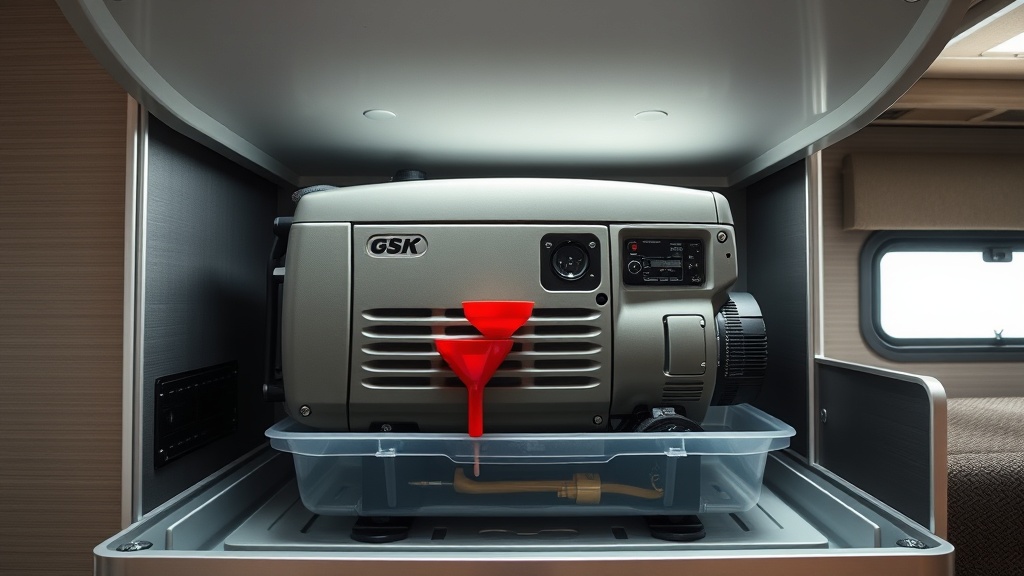
- Locate the generator compartment. On most RVs, it is in a slide-out tray under the chassis or behind a side door.
- Slide the generator out completely to access the underside.
- Place the drain pan directly under the oil drain plug.
- Using a socket, remove the drain plug carefully. Tilt the pan to catch the first splash.
- Allow all oil to drain (this takes 2 to 5 minutes). Hold the funnel next to the plug hole to avoid spills.
- Once drained, wipe the plug threads with a clean rag and reinstall it. Torque to manufacturer spec—typically 18–25 ft-lb (24–34 Nm) for most generators.
If your model has a separate oil filter, unscrew it after draining. Fill the new filter with fresh oil and seal the gasket with a thin layer of oil before screwing it on by hand (do not overtighten).
RV Generator Spark Plug Replacement: Step-by-Step Maintenance Guide will help you if your unit also requires spark plug checks during the same service interval.
What Oil Type and Capacity Does My RV Generator Need?
Choosing the correct oil is crucial. Here is a spec comparison table for common RV generators:
| Generator Model | Fuel Type | Oil Recommendation | Capacity (Quarts) | Severity of Using Wrong Oil |
|---|---|---|---|---|
| Onan Microlite 2800 | Gasoline | 10W-30 (API SJ or higher) | 1.5 | High – can cause valve sticking |
| Onan QG 5500 | Diesel | 15W-40 (CJ-4 spec) | 2.2 | High – leads to injector coking |
| Generac GP 3000 | Gasoline | 10W-30 (SAE 30 above 32°F) | 1.4 | Medium – increased wear |
| Honda EU2000i | Gasoline | 10W-30 or 5W-30 (synthetic) | 0.6 | Low – but will reduce lifespan |
| Cummins Onan 8.0 HDKAT | Diesel | 15W-40 (CJ-4 or CK-4) | 2.8 | Critical – warranty void risk |
Always use the oil grade that matches your climate. In cold weather (below freezing), 5W-30 is better for gasoline generators. Diesel generators with a block heater can accept 15W-40 year-round if preheated.
RV Generator Fuel Efficiency: Diesel vs Gasoline Comparison explains how fuel choice also impacts oil change intervals and overall maintenance costs.
How Do I Refill the Oil and Check the Level Correctly?
Refilling sounds simple, but many owners overfill, which causes foaming and oil loss through breathers. Follow these steps:
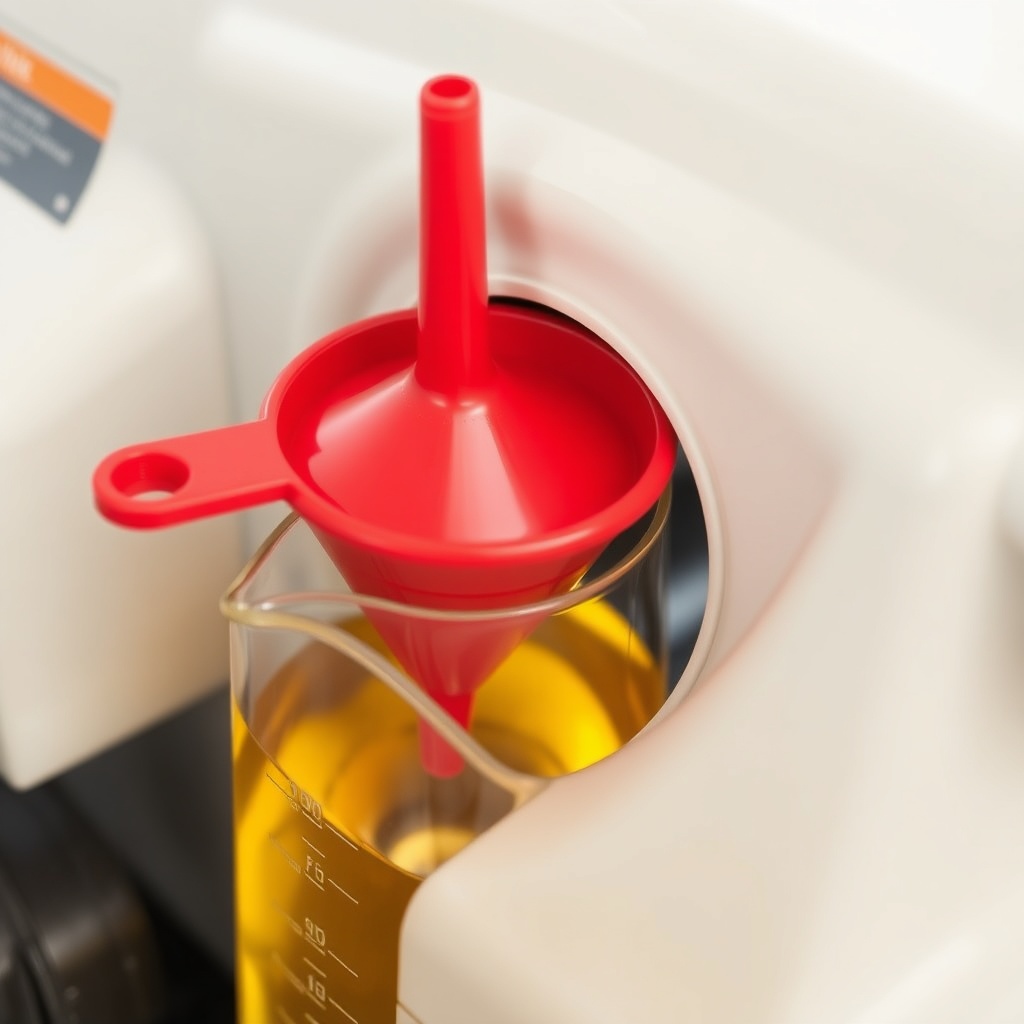
- Use a funnel with a long spout inserted into the oil filler neck.
- Pour in about 75% of the required capacity (e.g., 1.8 quarts for a 2.2-quart system).
- Wait 2 minutes for the oil to settle into the crankcase.
- Insert the dipstick without screwing it in. Pull it out and read the level.
- Add oil 0.1 quart at a time until the level reaches the “Full” mark on the dipstick.
- Screw the dipstick back in fully.
Start the generator and let it idle for 30 seconds. Shut it off, wait 1 minute, and recheck the level. The oil will circulate into the filter and passages, so you may need an extra 0.1 to 0.2 quarts.
If you are installing a dedicated battery charger alongside your generator, our guide DIY RV Generator Battery Charger Setup: Step-by-Step Installation Guide shows you how to integrate both systems safely.
What Owners Say About the Most Common Oil Change Mistakes
Experienced RV owners and mechanics frequently share the same pitfalls. Here are the most repeated ones from forums and service logs:
- Using car oil: Many people grab a 5W-30 designed for cars. But generators need heavier additives to handle sustained high RPM without cooling fans. Always use generator-specific or diesel-grade oil.
- Skipping the filter replacement: A dirty filter bypasses oil unfiltered, causing premature bearing wear. Always replace it if your model has one.
- Not warming up the engine: Cold oil is thick and won’t drain fully. You leave up to 0.5 quarts of dirty oil in the bottom, contaminating fresh oil immediately.
- Over-tightening the drain plug: Aluminium pans strip threads easily. A torque wrench costs £15 and prevents a £200 repair.
- Forgetting to record hours: Without a logbook, you’ll guess at intervals. Start a simple spreadsheet or use a dedicated app.
RV Generator Silent Operation Tips: How to Reduce Noise at Campgrounds complements your maintenance routine by showing you how to soundproof the generator compartment without restricting airflow.
Frequently Asked Questions
Q: Can I use synthetic oil in my RV generator?
A: Yes, synthetic oil is often better for generators because it handles higher temperatures and resists breakdown. However, check if your generator requires break-in oil first (usually full conventional for the first 50 hours). For most modern units, 5W-30 synthetic is ideal for cold climates, and 15W-40 synthetic works well for diesel models.
Q: What happens if I run my generator with low oil?
A: Most generators have a low-oil shutoff sensor that stops the engine before damage occurs. But repeated low-level operation can damage the sensor itself and cause oil starvation at high loads. Always check oil before starting, especially when running the generator while parked on a slope.
Q: How do I dispose of old generator oil?
A: Never pour oil down the drain or into the ground. Store used oil in a sealed container and take it to a local recycling centre, auto parts store, or council recycling facility. Many UK recycling centres accept up to 5 litres per visit free of charge.
Q: Can I change the oil while the generator is hot?
A: No, let it cool for 5 to 10 minutes after running. Hot oil can cause burns and may also damage rubber seals if drained while at operating temperature. Warm (not hot) is the ideal state—the oil flows easily but won’t scald you.
Q: Why does my generator blow white smoke after an oil change?
A: This is often from overfilling or spilling oil onto the exhaust manifold. Check the dipstick: if it’s over the full mark, drain 0.2 litres immediately. Also, run the generator at half load for 20 minutes to burn off any oil residue on hot surfaces.
Q: How do I know if my oil filter needs changing?
A: Visually inspect the filter for rust, dents, or oil leaks around the gasket. If your generator has a filter, change it every 200 hours or once per season. Most filters have a date stamp or a threaded ring that indicates when they were installed.