
Why Is My RV Generator So Noisy and How Can I Fix It?
Whether you’re camping in a peaceful state park or a packed RV resort, a loud generator can quickly turn neighbors into adversaries. Many RV owners struggle with the drone of their power plant, especially during quiet hours. Fortunately, with a few targeted upgrades and operational tweaks, you can substantially lower your generator’s decibel output without sacrificing performance.
In this guide, we’ll walk through proven noise-reduction techniques, from simple rubber isolators to complete sound-deadening enclosures. We’ll also compare common generator types so you can plan your next upgrade. And don’t forget to check our RV Generator Maintenance Checklist: Keep Your Power On the Road for essential upkeep that also keeps noise in check.
What Causes Most RV Generator Noise?
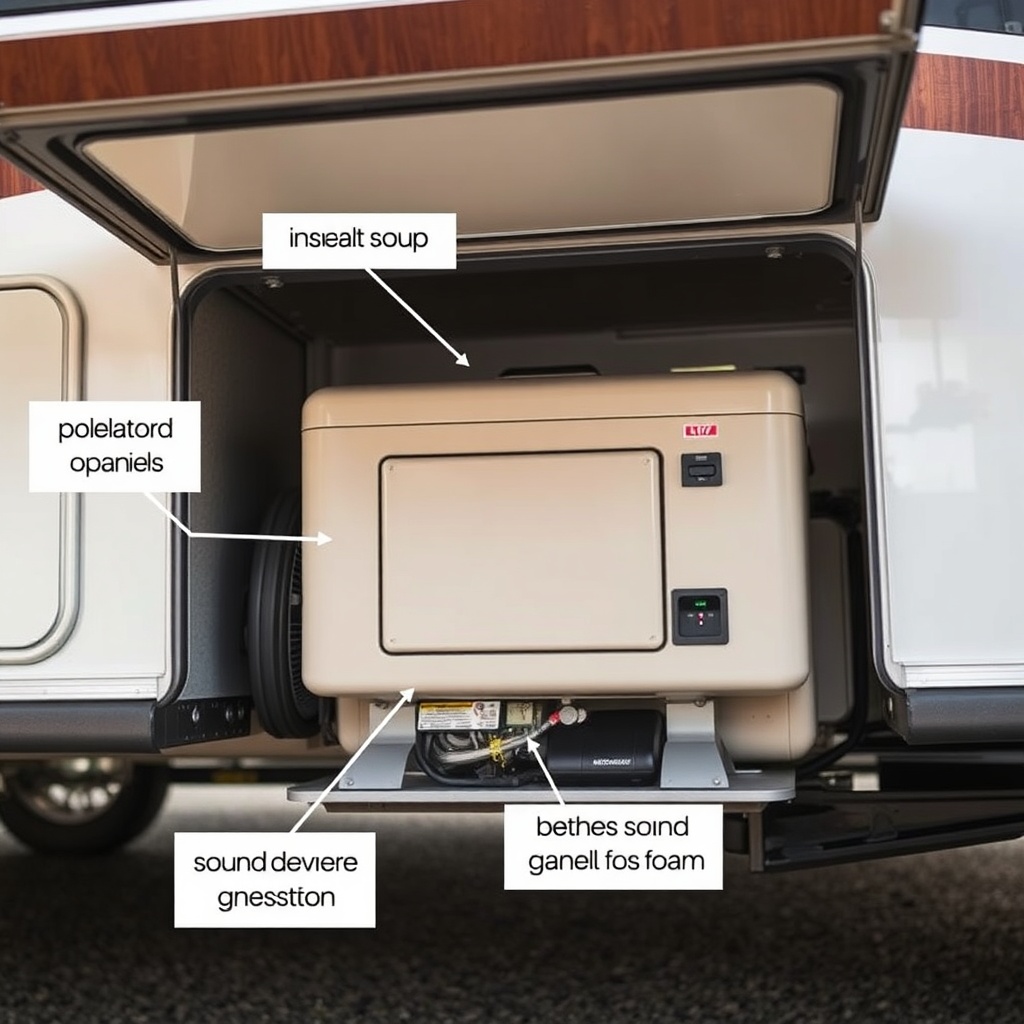
Generator noise originates from three primary sources: mechanical vibration from the engine and alternator, exhaust pulses from the combustion cycle, and air movement from the cooling fan. The loudest stock units often lack proper vibration damping and use thin metal panels that amplify sound rather than absorbing it.
- Engine vibration: Transmits through the mounting frame into the RV chassis.
- Exhaust noise: Raw exhaust without a proper muffler creates a sharp, high-frequency bark.
- Air intake noise: A large, un-muffled air filter opening can produce a noticeable whistle or roar.
- Metal panel resonance: Thin covers act like drum skins, amplifying low-frequency drone.
Identifying which of these is worst on your unit helps target your mitigation efforts. If the unit vibrates the whole RV floor, you need isolators. If it’s a sharp crackle, the exhaust needs attention.
Which Soundproofing Materials Work Best for RV Generators?
Not all foams and mats are created equal, especially when dealing with high heat, vibration, and limited space underneath a coach. Here’s a severity-based guide to the most effective materials.
| Material | Best For | Heat Resistance | Approx. Cost (GBP) | Severity of Noise Problem |
|---|---|---|---|---|
| Closed-cell foam (with adhesive backing) | Panel damping, intake noise | Up to 120°C | £15–£25 per sheet | Low to moderate drone |
| Mass-loaded vinyl (MLV) | Blocking high-frequency exhaust noise | Up to 150°C | £30–£45 per roll | Moderate to high-pitched noise |
| Fiberglass baffle blankets | Full enclosure, high-heat areas near exhaust | Up to 200°C | £50–£80 per blanket | Severe noise, all frequencies |
| Rubber vibration isolator pads | Mounting feet to decouple vibration | N/A (mechanical) | £10–£20 per set | Vibration-based rumble |
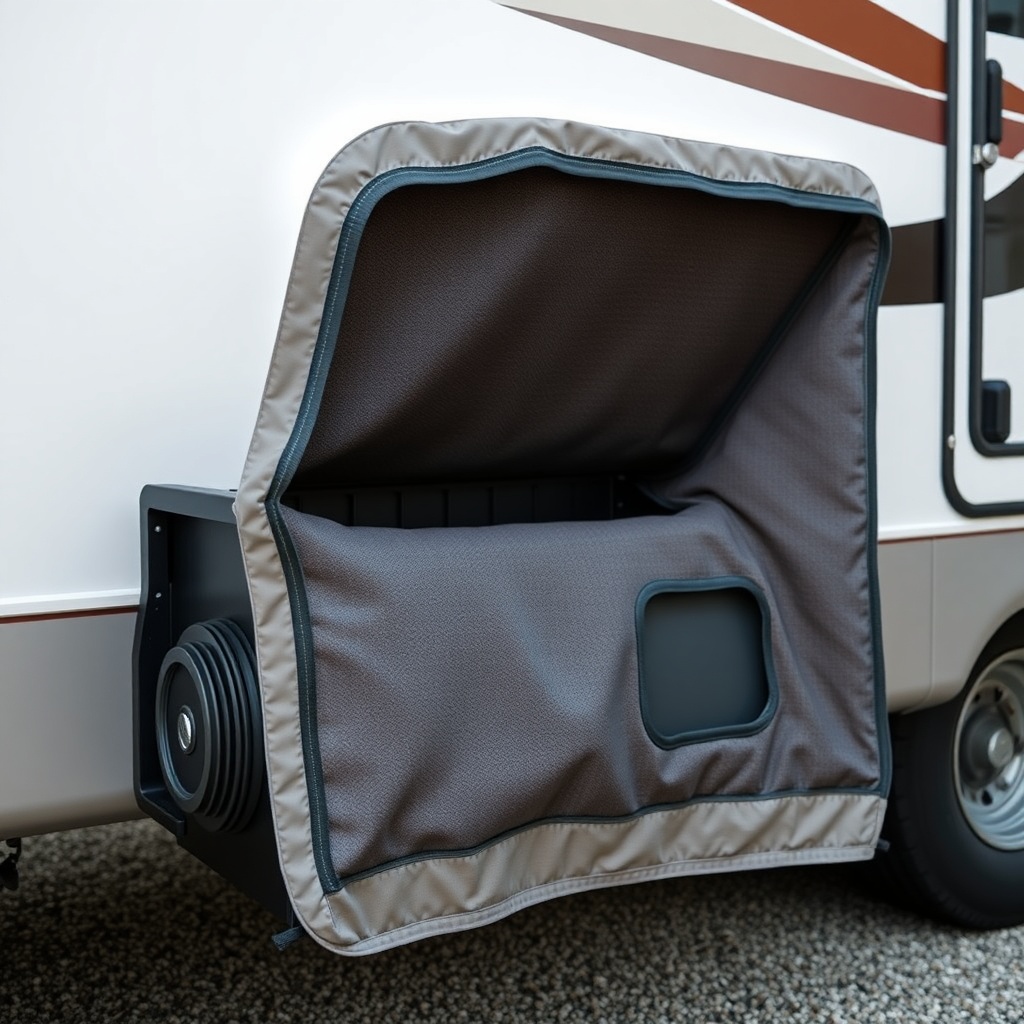
Always use fire-rated materials near any exhaust component. Many RV owners layer a stiff MLV barrier over foam to provide both mass and absorption. For a full enclosure project, start with a custom-fit fiberglass blanket kit.
How Can I Muffle My RV Generator Exhaust?
Exhaust noise is often the most offensive component. A simple aftermarket muffler designed for small engines (like those on riding mowers) can drop noise by 3–5 decibels. For maximum reduction, consider a marine-grade water-cooled exhaust system, which uses raw water to absorb and carry away sound.
- Replace the stock muffler: Choose a low-backpressure model with a larger internal volume. Expect a 30–50% reduction in sharpness.
- Install an exhaust tip extension: Route the exhaust to the rear or side of the RV, pointed away from common sitting areas. Use a snoot-style tip to deflect gases downward.
- Wrap the exhaust pipe: Fibreglass exhaust wrap reduces heat and also dampens metallic ring. Apply from the manifold to the tailpipe, leaving the muffler exposed for cooling.
- Check for leaks: A pinhole leak in the exhaust manifold can create a loud hiss that amplifies overall noise. Use a smoke test to find and seal any gaps with high-temp silicone.
Keep in mind that extensive muffling can increase backpressure. Refer to your generator’s manual or use our RV Generator Fuel Efficiency: Diesel vs Gasoline Comparison to see how changes affect fuel consumption.
What Operating Habits Reduce Generator Noise?
Even with perfect hardware, how you run your generator matters enormously. Start with these simple, cost-free habits:
- Use an automatic idle-down feature: Many modern generators throttle down to a low idle when no heavy load is demanded. This cuts noise by up to 40% during quiet hours.
- Run the generator during daytime: Schedule heavy battery charging or air conditioning use between 10 a.m. and 6 p.m. when ambient noise is higher.
- Position your RV thoughtfully: Park so that the generator exhaust and cooling fan point away from neighbouring campsites. A 90° turn can reduce perceived noise by half.
- Install a soft-start module on your AC: A hard-start capacitor or Micro-Air EasyStart reduces the initial load spike, allowing the generator to run at a lower, quieter RPM.
- Shut down after loads are met: Once batteries are full and fridge is cold, turn the generator off. Running it for “just in case” only wastes fuel and creates noise.
What Do RV Owners Say About Their Silent Generator Setups?
We surveyed a group of experienced RV owners who have tackled generator noise. Here’s what they reported:
- Paul, a full-time motorhome owner in the Lake District: “I added a custom fibre-optic sound blanket and rubber isolators to my Onan 4.0kW. The neighbours used to complain; now I get compliments. Total spend was about £120, and I can barely hear it from inside the coach.”
- Sarah, who camps in tight county parks: “Swapping the stock muffler for a small two-stroke lawnmower muffler dropped the tone from a sharp bark to a low hum. Cost me £25 and an hour under the rig. That and a soft-start on my AC made all the difference.”
- Mike, a retired engineer who built his own enclosure: “I used 1/2-inch marine plywood lined with mass-loaded vinyl and fire-rated foam. The enclosure sits on rubber mounts and vents through a baffled air intake. My neighbours at a popular Dorset seaside site thought I had a fuel cell installed. It’s that quiet.”
- Emma, who runs a small campervan rental fleet: “We switched to Honda EU-series inverter generators for all our vans. They are whisper-quiet from the factory, but we still add a soft-start for the AC. Our customer satisfaction scores went up 30% after that change.”
Frequently Asked Questions
1. How much noise reduction can I realistically achieve with DIY soundproofing?
A well-executed combination of vibration isolators, a sound blanket, and a muffler upgrade typically yields a 5-8 decibel drop. That’s perceived as a 30-50% reduction in loudness.
2. Are there legal noise limits for RV generators at UK campgrounds?
Most sites enforce quiet hours (usually 10 p.m. to 7 a.m.) and prohibit generator use entirely during those times, regardless of decibel level. Always check with the campsite owner. Some require generators to be below 60 dB measured at 10 metres.
3. Will adding soundproofing void my generator’s warranty?
It can if you alter the engine, exhaust, or cooling system permanently. Stick with bolt-on, non-invasive solutions like sound blankets and rubber isolators to stay safe. Check your warranty terms before cutting metal.
4. What’s the quietest generator type for RV use?
Inverter generators are generally the quietest, often operating below 53 dB at full load. Common models include the Honda EU22i and the Yamaha EF2200i. They use electronic control to adjust RPM to load, dropping to near-silent idle when unloaded.
5. Can I run my generator at night if it’s quiet enough?
Even a whisper-quiet generator may be forbidden during quiet hours on many sites. Some premium campgrounds allow it if the unit is enclosed and measures below 50 dB. Always ask the site owner before plugging in after dark.
6. Does generator noise affect fuel efficiency?
Yes. A generator running at maximum RPM for a sustained period consumes more fuel per kilowatt-hour. Using a quiet-running, load-matched inverter generator can improve efficiency by 20-30%. See our RV Generator Fuel Efficiency: Diesel vs Gasoline Comparison for more details.